Why a Linen Down Comforter Feels Different — And Sleeps Cooler

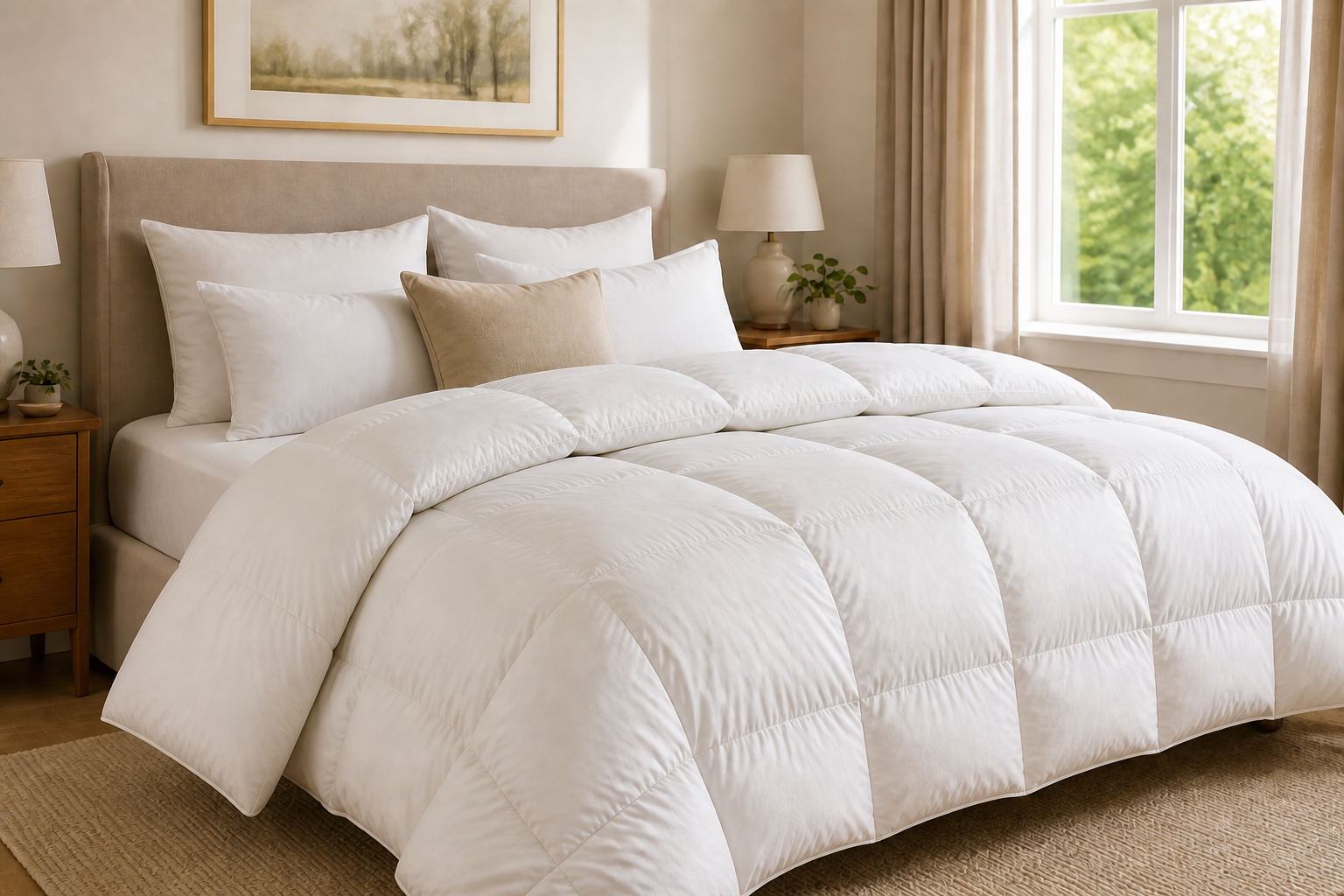
Most people shop for a down comforter by fill alone, then wonder why two comforters with nearly identical warmth ratings feel completely different in bed. The missing variable is almost always the shell. Swap a standard tight-weave cotton for linen, and the entire feel of the comforter changes — texture, drape, temperature, even how it looks folded at the foot of the bed.
The Shell Fabric People Skip Past
Shoppers spend most of their attention on fill power and warmth level, and almost none on what’s actually touching their skin all night. That’s a mistake, because shell fabric decides how breathable, how crisp, and how durable a comforter feels over years of use — not just on day one. A dense, tightly woven shell can trap heat regardless of how light the fill inside is, while a looser, more textured weave lets air move the way it’s supposed to.
What Makes Linen Different From Cotton
Linen is woven from flax fibers rather than cotton, which gives it a naturally looser, more open weave. That structure is what makes linen feel cooler to the touch and more breathable than most cotton alternatives, even at a similar thread density. It also softens with every wash instead of wearing thin, and it has a relaxed, slightly textured drape that reads as more elevated than a flat, uniform cotton finish. The tradeoff is that linen wrinkles more visibly than cotton — most linen fans consider that part of the look rather than a flaw.
Linen and Goose Down: A Pairing Built for Airflow
Linen’s breathability matters most when it’s wrapped around a substantial fill, because that’s exactly when a dense shell would otherwise trap the most heat. A well-made linen down comforter solves that problem by letting the shell do the work a lighter fill can’t do on its own — you get the loft and softness of goose down without the stuffy, sealed-in feeling a denser fabric creates. The linen down comforter built around this idea pairs a relaxed linen shell with goose down proportioned to stay airy rather than heavy, which is why it tends to sleep noticeably cooler than a comforter with an identical fill wrapped in standard cotton.
How Linen Compares to Other Shell Options
Cotton percale is still a strong, reliable choice — crisp, widely available, and easy to care for, which is part of why an option like the Organic Cotton Goose Down Comforter remains a dependable everyday pick. Silk sits at the opposite end, offering a smoother, more polshed hand-feel; a comforter like the Deluxe Silk Goose Down Comforter is built for shoppers who want that refined, almost cool-slip texture rather than linen’s more textured, matte finish. Linen lands in between the two — more breathable and relaxed than cotton, more textured and casual than silk — which is exactly why it appeals to people who want a bedroom that feels effortless rather than either too plain or too formal.
Who a Linen Down Comforter Is Actually Right For
Linen tends to suit warm sleepers who still want real coverage, anyone furnishing a bedroom with a relaxed, lived-in aesthetic rather than a crisp hotel look, and households in humid or inconsistently air-conditioned climates where extra airflow makes a real difference overnight. It’s a weaker match for anyone who wants a perfectly smooth, wrinkle-free bed at all times, since linen’s texture is part of its character rather than something that irons out completely.
Caring for Linen Without Losing the Texture
Linen holds up well over time, but it rewards a slightly gentler routine than cotton. Washing in cool or warm water rather than hot preserves the fiber’s texture and prevents premature wear, and air-drying or a low-heat tumble cycle keeps the fabric from becoming brittle. Skip harsh fabric softeners — they tend to flatten the texture that makes linen worth choosing in the first place. A little wrinkling after washing is normal and part of the fabric’s relaxed character, not a sign it needs ironing.
The Bottom Line
A linen down comforter isn’t just a cotton comforter with a different label — the looser weave genuinely changes how the comforter breathes, feels, and ages. If you’ve been choosing between fill options without considering the shell, linen is worth a closer look, especially if you run warm at night, live somewhere humid, or simply want your bedroom to feel a little more relaxed and elevated at the same time.
FAQ
Is a linen down comforter warmer or cooler than a cotton one?
Generally cooler, thanks to linen’s looser weave, which allows more airflow than a standard tight cotton weave. The warmth still comes primarily from the fill, but the shell fabric has a real effect on how hot or cool the comforter feels overnight.
Does linen bedding wrinkle more than cotton?
Yes, and that’s typically considered part of linen’s relaxed character rather than a flaw. Most linen fans embrace the slightly rumpled look instead of trying to iron it out.
How do I wash a linen down comforter without damaging it?
Use cool or warm water, avoid fabric softeners, and either air-dry or tumble dry on low heat. This preserves the fiber’s natural texture and helps the comforter hold up well over repeated washes.